Litigation
The Silent Crisis in Litigation Practice


The real challenge in litigation often begins long before the courtroom. Every case depends on managing an ever-growing web of documents, hearings, communication, and information.
When people think about litigation lawyers, they usually imagine what happens inside a courtroom. They picture intense arguments, cross-examinations, and landmark judgments. They imagine lawyers spending their days researching the law, drafting submissions, and representing clients before judges.
But ask any litigation lawyer how their average working day actually looks, and you'll hear a very different story. A surprisingly large portion of their day is spent not on legal work, but on managing information and paperwork.
None of these tasks requires legal expertise. Yet they consume hours of a lawyer's time every week.
Checking hearing dates. Tracking case statuses. Following up with clients. Reviewing cause lists. Coordinating with clerks. Searching through WhatsApp chats for case details. Updating diaries and calendars. Confirming whether an order has been uploaded. Making sure no hearing date has been missed.
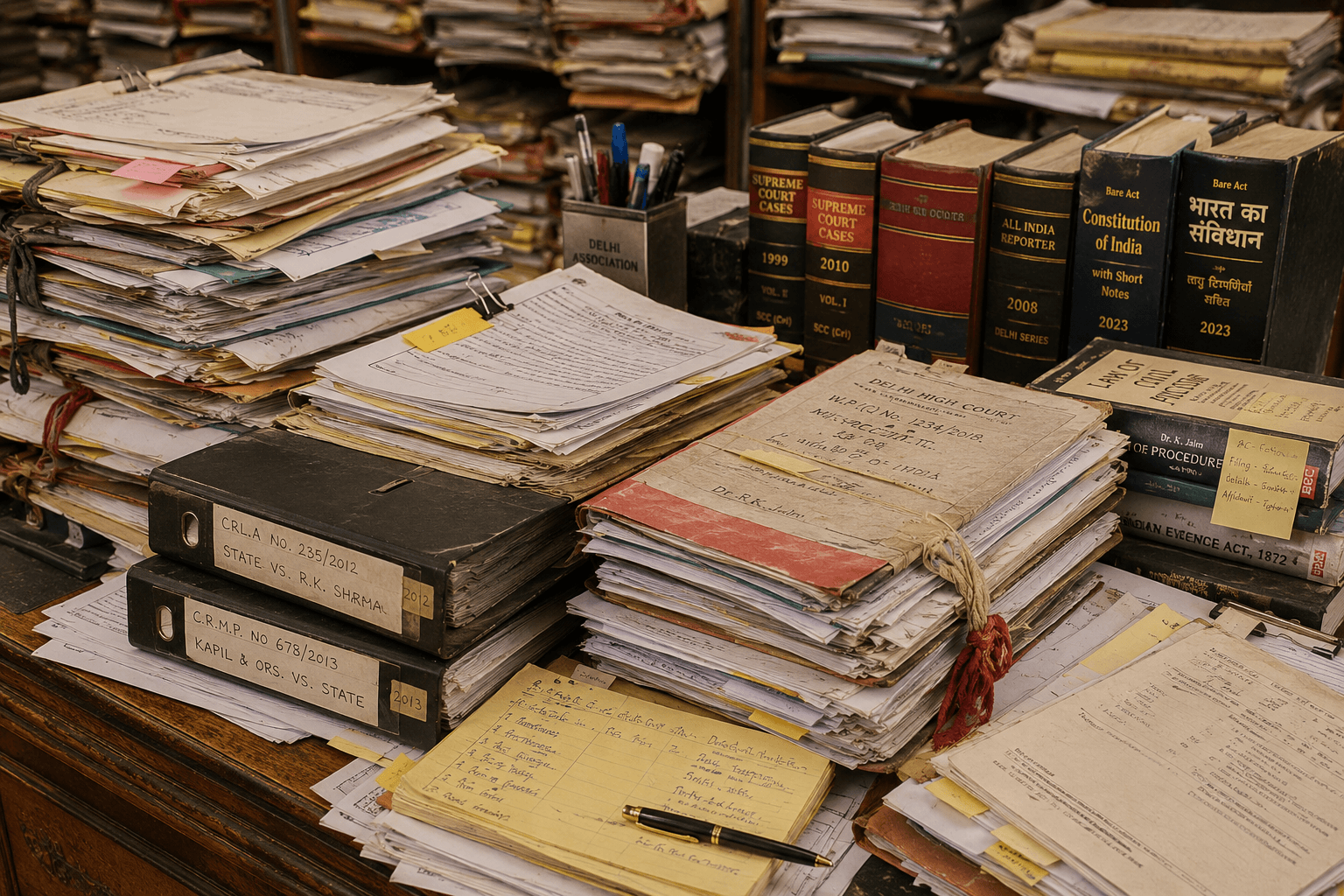
Over the years, litigation has evolved significantly. Courts have become increasingly digitised, case volumes have grown, and clients expect faster communication than ever before. However, the systems used by many lawyers to manage their daily practice have remained largely unchanged. The result is a profession where many lawyers are spending more time managing their cases than actually working on them.

The Administrative Burden Nobody Talks About
For most litigation lawyers, the day begins with uncertainty. The first question is often not "How do I prepare my argument?", it is "What matters are listed today?"
A lawyer handling multiple cases across different courts needs to constantly monitor hearings, adjournments, orders, and procedural developments. Every update has the potential to impact schedules, client expectations, and case strategy.
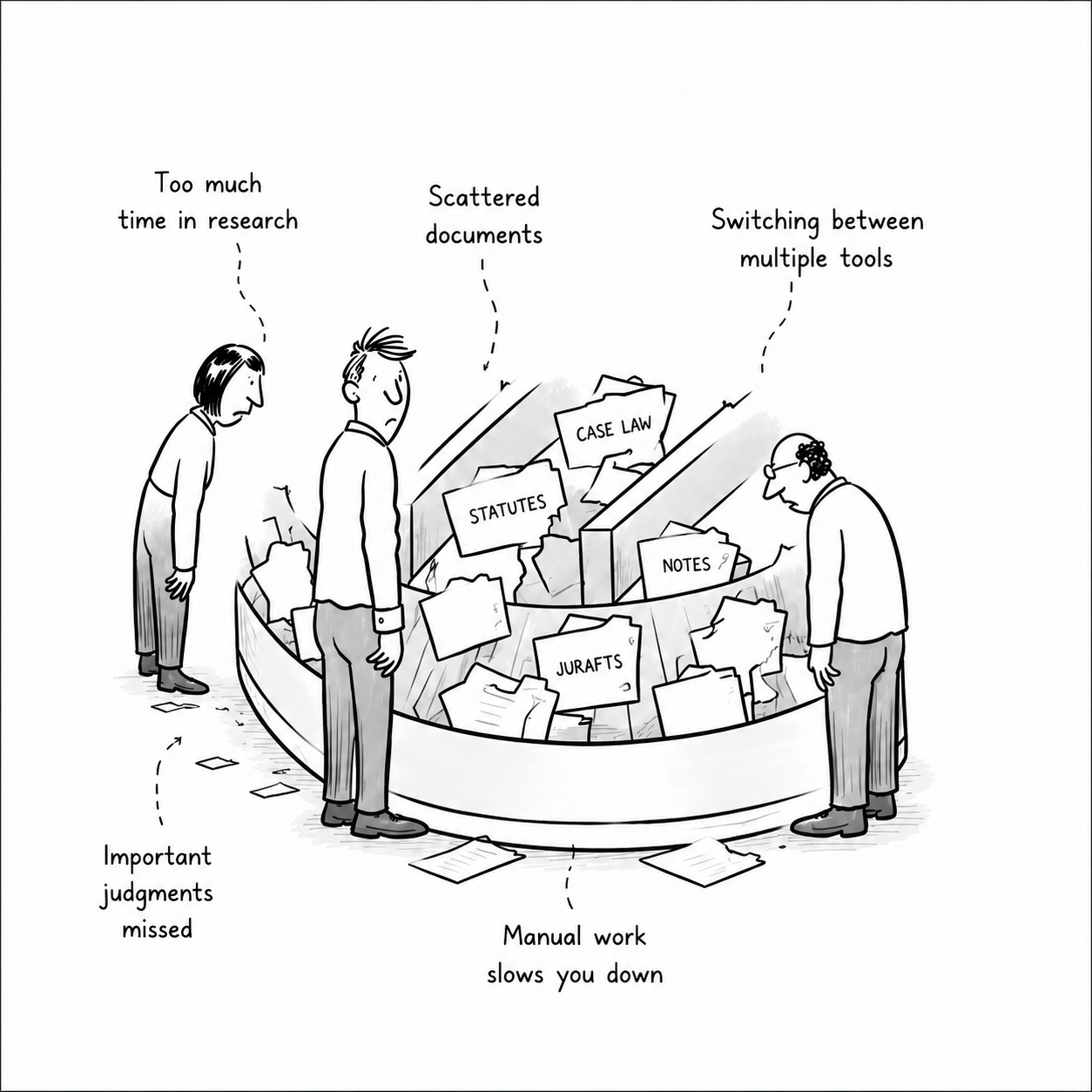
The challenge becomes even more difficult because information rarely exists in one place. A hearing date may come from a court website, an important update may arrive through a clerk, a client may send documents through WhatsApp, cause lists may need to be checked separately, orders may be uploaded later, important reminders may be noted in a diary, some details live inside a spreadsheet, others exist only in someone's memory. The modern litigation workflow is often a patchwork of disconnected systems. Lawyers spend a considerable amount of time simply bringing all these pieces together.
Growth Creates New Problems
The irony is that success often makes the problem worse.
A lawyer handling twenty matters can usually manage their practice using a diary and personal memory. A lawyer handling two hundred matters cannot.
As practices grow, the administrative workload increases exponentially. Every new case introduces new dates, new filings, new client communications, and new follow-ups. Many lawyers eventually discover that their biggest operational challenge is no longer legal complexity, it is information overload.
- Important dates begin competing for attention
- Client updates become harder to manage
- Finding specific case information takes longer
- Simple administrative work starts consuming evenings and weekends
What should have been growth starts feeling like chaos.

The WhatsApp Reality

Perhaps the clearest illustration of this challenge is WhatsApp. Whether intended or not, WhatsApp has become one of the most important tools in modern litigation practice.
- Lawyers use it to communicate with clients
- Clerks use it to share updates
- Documents are exchanged through it
- Case discussions happen inside it
- Hearing information is circulated through it
For many lawyers, critical case information now flows through dozens of chats every single day.
While WhatsApp is convenient, it was never designed to function as a legal practice management system.
The legal profession has effectively built a significant portion of its operational workflow around a communication tool. That alone reveals how large the underlying problem has become.
Messages get buried. Files become difficult to locate. Important updates disappear into endless conversations. Yet lawyers continue to rely on it because it is simple, familiar, and universally adopted.
And as cases continue to grow, that gap is becoming harder to ignore.

 Get Started Free